


When the Camera Stops Being Proof: The New Chain of Trust for Visual Journalism
For more than a century, photography carried a cultural privilege that few other forms of evidence enjoyed. A photograph could be cropped, staged, miscaptioned or manipulated, but the basic bargain remained powerful: at some point, light passed through a lens and struck a surface. Something had been there.
Generative AI has not destroyed that bargain so much as rewritten it. A believable image can now arrive without a camera, a place, a witness or even an event. At the same time, a genuine photograph can be stripped of metadata, reposted with a false caption, compressed until forensic clues disappear, or dismissed as synthetic simply because someone does not like what it shows.
The camera did not stop being evidence. It stopped being enough.
That distinction is the center of the new visual-journalism problem. The strongest research does not support a future in which one detector, one watermark or one label restores certainty. Instead, evidence is becoming procedural. Trust increasingly comes from a chain: where a file originated, what happened to it, who supplied it, whether the scene can be independently corroborated, what technical signals survive, and whether a human editor is willing to explain the judgment.
1. The moment of capture is now only the first claim
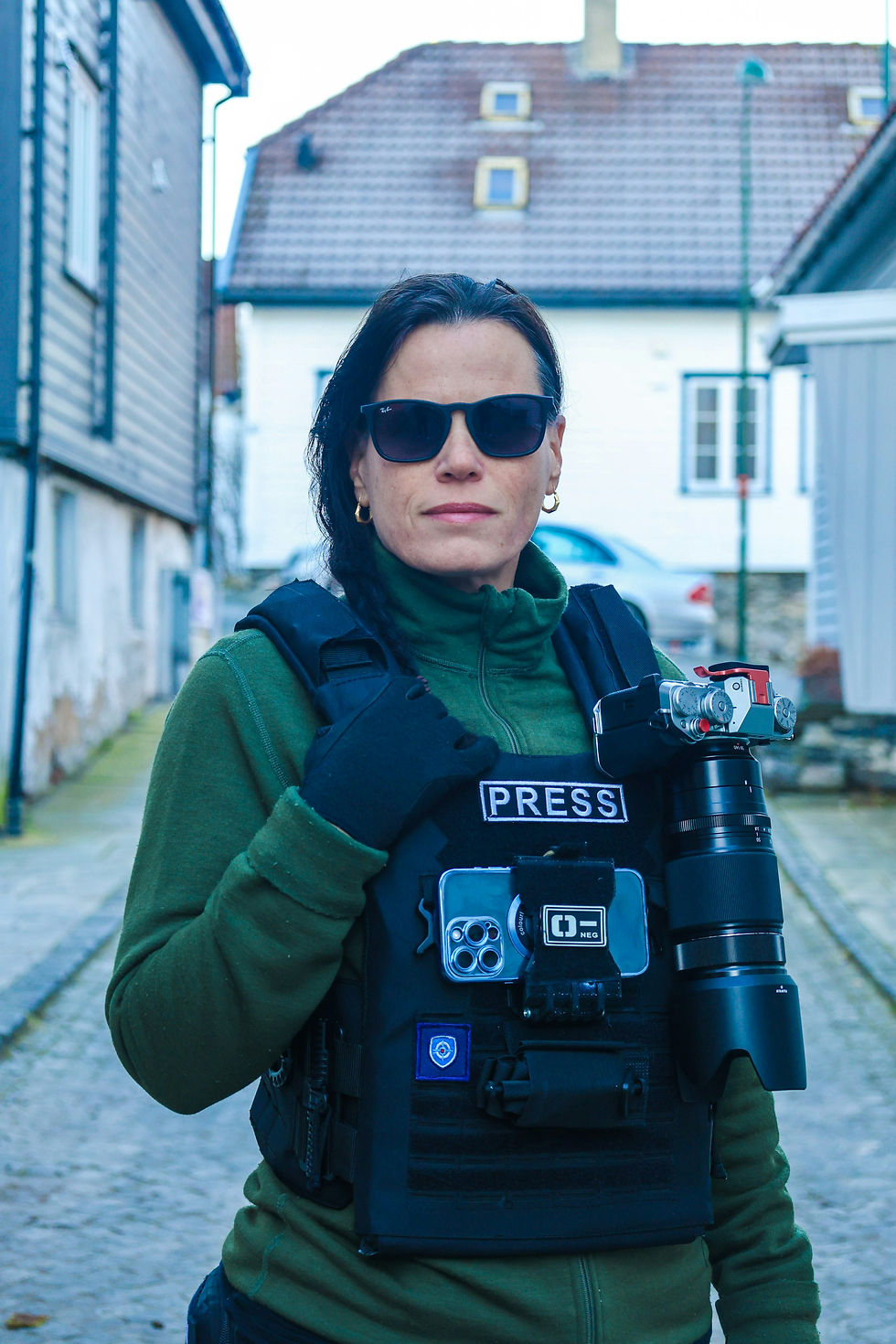
The traditional newsroom workflow began with the photographer: be present, make the frame, preserve the original, write an accurate caption and deliver the work to an editor. That discipline still matters. What changed is the environment around the image.
Microsoft Research's 2026 report Media Integrity and Authentication: Status, Directions, and Futures describes an ecosystem in which authenticity methods must function across capture, editing, distribution and verification. The researchers compare three broad families of signals: cryptographically secured provenance, imperceptible watermarking and soft-hash fingerprinting. Each answers a different question, and each can fail in a different way.
The report also describes a problem that deserves more attention than the familiar deepfake headline: reversal attacks. An adversary may try to make synthetic media look authentic, but the reverse matters too. Authentic media can be altered or framed so that it appears synthetic. In a polarized information environment, that second possibility feeds what researchers and journalists increasingly describe as the liar's dividend: the ability to dismiss genuine evidence by claiming it was generated.
2. The image travels faster than its context

The modern visual-news problem rarely begins inside a newsroom. It begins in the feed. A video is reposted without its original caption. A screenshot loses the surrounding thread. A clip from one conflict is relabeled as another. A genuine frame is paired with a false claim. A synthetic image is passed through enough compression and copying that obvious generation artifacts disappear.
Reuters offered a useful look at what professional verification now requires in an August 28, 2026 explanation of its Visual Verification Team. The team examines hundreds of images and videos a day, Reuters says, but only a small fraction make it through the process for publication. Reporters try to identify and interview the original uploader. They examine metadata when it exists. They compare weather, satellite imagery, street-view and archive images, shadows, time of day, official reporting and other eyewitness material.
Reuters also uses AI-detection tools. But the newsroom is explicit about their role: those tools are not foolproof, and journalists make the final judgment. That is a crucial professional boundary. Detection can contribute evidence. It should not become an oracle.
3. Why the deepfake detector cannot be the judge

Deepfake detection is attractive because it promises a binary answer to a messy question: real or fake. The technical literature is much less comforting. Irene Amerini's 2025 review of deepfake media forensics describes persistent problems with data drift, evolving manipulation techniques, limited cross-domain generalization, interpretability and the damage caused by ordinary social-media operations such as compression and resizing.
A detector trained on yesterday's generation method can struggle with tomorrow's. A system that performs well on a benchmark can weaken when confronted with a new camera pipeline, codec, platform or manipulation. Even a strong score can be hard for a journalist to translate into an editorial conclusion if the system cannot explain which evidence drove the classification.
Microsoft's companion analysis, Media Authenticity Methods in Practice, reaches a compatible conclusion from another direction. Fingerprinting can help manual forensic work and matching, but it is not the same thing as high-confidence authentication. Watermarks can add a durable signal, but they can be attacked or lost. Cryptographically signed provenance can be stronger, but only if the chain survives the tools and platforms that handle the file.
This is why the future of verification is unlikely to be a better 'AI detector' button. The more durable approach is redundancy: multiple independent signals that can fail differently rather than one signal asked to carry the entire burden of truth.
4. Authentication and verification are not the same job

The Princeton Center for Information Technology Policy and NYU Journalism newsroom guide makes perhaps the most useful conceptual distinction in this entire debate. Authentication asks about provenance: where did this media come from, and what is its history? Verification asks whether the media depicts what someone claims it depicts.
An authentic image can still be misinformation.
A photograph may be genuinely captured by a real camera, signed by a trusted device and preserved through an unbroken provenance chain, yet still be attached to the wrong date, wrong city, wrong person or wrong explanation. Conversely, a file with broken provenance is not automatically false. A journalist may receive a legitimate image through a platform that strips metadata or through a source who must intentionally obscure identifying details for safety.
That distinction turns photographic evidence from an object into a process. The question is no longer simply, 'Is this photograph real?' It becomes: 'What can we establish about this file, this scene, this source and this claim, and which parts remain uncertain?'
5. C2PA is trying to build a chain of custody for pixels
The Coalition for Content Provenance and Authenticity, or C2PA, is one of the most consequential attempts to formalize that process. Content Credentials can attach cryptographically signed information about origin and editing history to a media asset. The 2026 implementation guidance expands the vocabulary available for describing synthetic and modified content.
The standard can record AI disclosure information, including model-related provenance and human-oversight information. Regions of Interest can identify where an AI-assisted edit occurred within an image, video, page or section of text. Ingredient assertions can describe inputs used during generation, including prompts or reference material. Action histories can record events such as creation, opening, editing and enhancement.
Conceptually, that begins to resemble a digital chain of custody. Instead of asking the viewer to infer authenticity from appearance alone, the file can carry signed claims about where it came from and what happened along the way.
But the chain is only as strong as its implementation. Princeton and NYU's full Holding the Line report notes that content-management systems and third-party platforms can strip manifests. Social platforms frequently remove or alter metadata. A signed camera file can therefore enter a newsroom with useful provenance and leave a distribution platform with less of it.
Microsoft's work also points toward camera-side secure enclaves: hardware-isolated environments that can protect signing keys and make it more difficult to forge a trusted capture event. That is an important direction because it moves authenticity closer to the point where photons become a file. Yet even perfect capture provenance cannot verify the caption written afterward.
6. Provenance creates a privacy problem too
There is another reason to resist simplistic calls for every photograph to carry a complete identity trail: sometimes the safest authentic record is one that reveals less.
A journalist documenting a protest, dissident group, conflict zone or vulnerable source may not want a public manifest to expose a precise capture location, device identity or personal information. The Princeton/NYU report warns that provenance metadata can create privacy and safety risks in hostile environments. The strongest provenance system therefore cannot merely maximize disclosure. It must give creators and newsrooms ways to prove what matters while withholding what could put people at risk.
That is an uncomfortable but necessary trade-off. A system designed to make media more trustworthy can itself become a surveillance surface if it treats maximum metadata as synonymous with maximum integrity.
7. Do provenance labels actually make audiences trust the news?
There is early evidence that they can help, but the result is more nuanced than 'add a badge, restore trust.' A study by Christoph Trattner, Sandra L. Forstner, Alain Starke and Erik Knudsen tested C2PA-style provenance labels with 6,114 participants in the United States, United Kingdom and Norway. The work, initially circulated as a preprint, has since been peer-reviewed and published in the 2026 Proceedings of the International AAAI Conference on Web and Social Media. The study found that provenance labels increased perceived transparency and credibility and improved trust in the source.
A 2026 systematic review by Livia Licenji and Jonida Hoxha adds an important caution. After screening 290 records and including 47 studies with retrievable full texts, the authors found no consistent, universal 'AI penalty' in journalism. Audience reactions vary by topic, prior trust, outlet cues and whether meaningful human oversight is signaled. Disclosure effects were frequently null or conditional.
That matters because it suggests provenance cannot be reduced to interface decoration. People interpret labels through preexisting relationships with institutions, platforms and journalists. A technically impeccable credential attached to a distrusted outlet does not automatically repair the social conditions that produced the distrust.
8. The final product is not the image. It is the judgment.

This may be the most important shift for photographers, editors and audiences. A visual journalist can no longer assume that technical realism will carry credibility on its own. The newsroom must increasingly make the verification process legible.
Reuters' workflow is instructive because no single step is spectacular. The strength comes from accumulation. Source interview. Original upload. Metadata. Location. Weather. Shadows. Satellite imagery. Street-view comparisons. Other eyewitness media. Official reporting. Detection tools. Editorial review. Any one clue can be weak. Together, independent clues can form a defensible conclusion.
A practical chain of trust for visual journalism
Preserve the original capture whenever possible, including native metadata and the highest-quality source file.
Establish provenance: who created the media, on what device or platform, and what transformations can be documented.
Identify and interview the original source when circumstances allow.
Verify the scene independently through geolocation, time, weather, shadows, architecture, satellite or street imagery, and corroborating eyewitness material.
Use forensic and AI-detection systems as supporting signals, not as final arbiters.
Record meaningful edits and disclose synthetic or AI-assisted changes when they affect interpretation.
Require human editorial judgment and preserve a record of how consequential authenticity decisions were reached.
Explain uncertainty to the audience instead of converting incomplete evidence into false certainty.
The list sounds slower than simply looking at a photograph and deciding whether it feels real. That is precisely the point. Generative AI has made fabrication cheaper and faster. Verification is becoming the expensive part of the information economy.
9. What this means for photographers
For working photographers and videographers, this transition does not make craft less important. It expands the definition of professional craft. Exposure, composition, timing and editing remain fundamental. But provenance hygiene, file preservation, caption discipline and transparent workflow are becoming part of the credibility of the picture itself.
Creators should retain original files, avoid unnecessary destructive conversions, preserve metadata when safety allows, keep clear edit histories for consequential work and understand what their cameras, editing software and publishing platforms do to Content Credentials. Newsrooms should test whether their own CMS strips provenance before claiming to support it. Editors should know which authentication signals survive social distribution and which do not.
The standard is no longer 'never edit.' Photojournalism has always involved selection, cropping, tonal adjustment and editorial judgment. The emerging standard is closer to this: know what changed, preserve what matters, disclose what could alter interpretation, and be able to show your work when trust is challenged.
10. The photograph is becoming procedural evidence
There is a temptation to frame the AI era as the death of photography: if anyone can make anything, then nothing can be believed. The evidence does not justify that fatalism. It points toward a more demanding future.
The photograph is not worthless. It is becoming procedural evidence. Its credibility increasingly depends on the relationship between the image and the system around it: signed provenance when available, technical signals, source accountability, contextual corroboration, editorial standards and transparent reasoning.
That may ultimately strengthen journalism. For decades, audiences often saw only the finished frame. The verification work stayed invisible. In the synthetic-media era, the profession has an incentive to expose more of that process: not merely 'trust us,' but 'here is how we know.'
The future of visual journalism is not a magic detector. It is a chain of trust strong enough that each link can be challenged, inspected and explained.
Sources and further reading
Trattner, Forstner, Starke & Knudsen — C2PA Provenance Labels Increase Trust in News Platforms Across Western Countries — peer-reviewed ICWSM 2026 publication of the study previously circulated as an OSF preprint.
AI assistance disclosure: Research synthesis and drafting were assisted by AI. Claims were checked against the linked primary, academic and professional sources; editorial framing and publication judgment remain human.


Comments